


Holi Rangostav: A Colorful Celebration of Cultural Unity
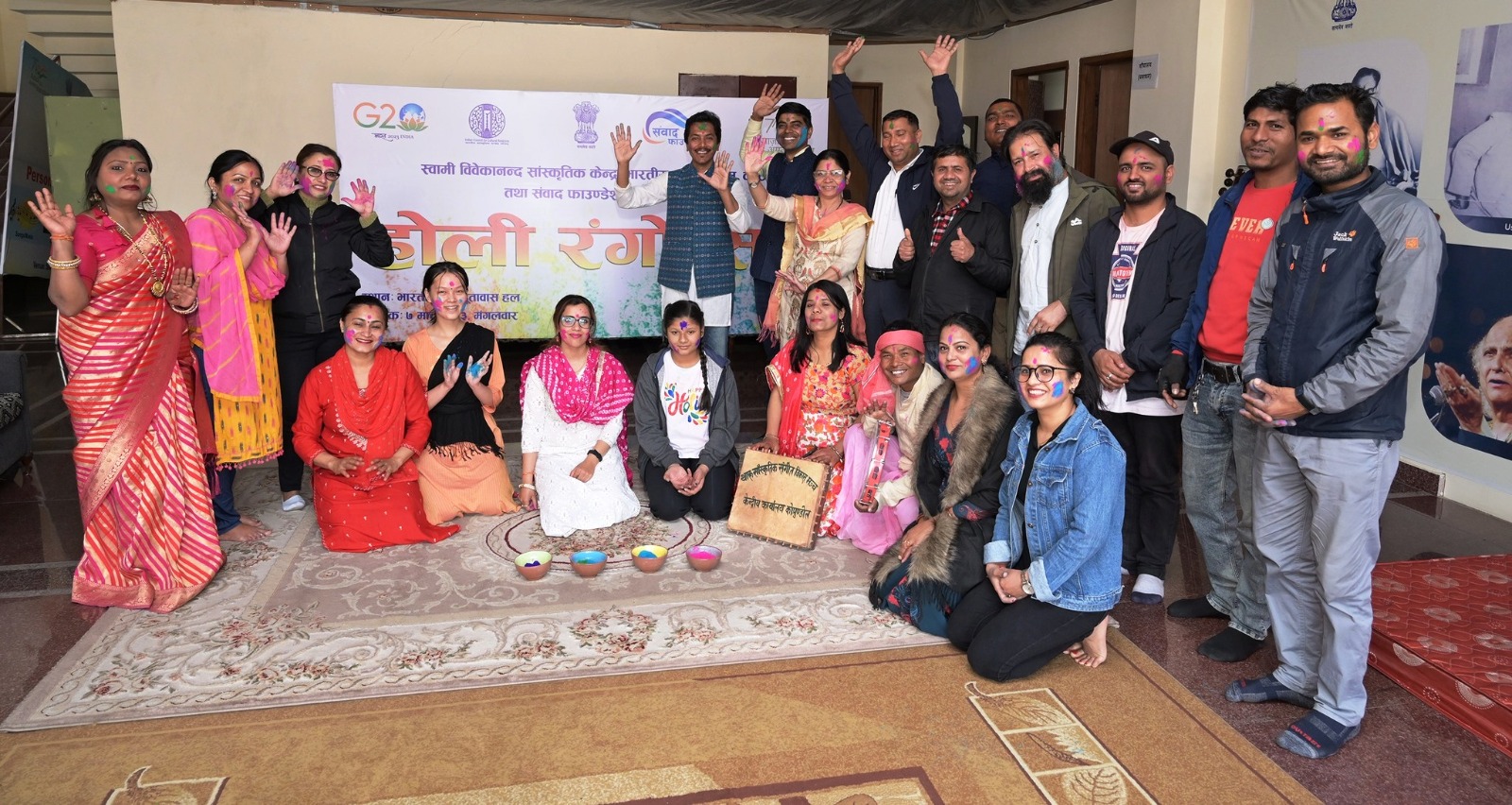
On March 7, 2023, a splendid event called “Holi Rangostav” took place, bringing together communities and artists from various linguistic backgrounds to celebrate the joyous occasion of Holi. The event was organized by the Swami Vivekanand Cultural Centre (SVCC), the Embassy of India, Consulate General of Birgunj in collaboration with the Sambad Foundation, and aimed to foster cultural exchange and unity through the power of music and performance.
Inclusive Performances:
The heart of Holi Rangostav lies in its diverse and inclusive performances. Folk artists, renowned for their talent and deep connection with traditional arts, showcased their skills on stage. Alongside them were students from SVCC, eager to contribute to the cultural tapestry of the event. Together, they enchanted the audience with melodious Holi songs, sung in various languages including Nepali, Hindi, Maithili, Bhojpuri, Nepal Bhasa, and Tharu.
Cultural Richness and Unity:
Holi Rangostav became a mesmerizing amalgamation of cultures, reflecting the vibrant tapestry of the region. Each performance highlighted different communities’ unique linguistic heritage and musical traditions, fostering a sense of pride and unity. The event provided a platform for artists to express themselves, while also offering the audience a glimpse into the rich cultural heritage that exists within the local community.
Collaboration and Community Engagement:
The collaboration between the Sambad Foundation and SVCC exemplified the power of collective efforts in creating a memorable celebration. By engaging students from SVCC, the event not only provided them with an opportunity to showcase their talent but also encouraged the younger generation to appreciate and participate in their cultural heritage. This collaborative effort showcased both organizations’ commitment to preserving and promoting the arts.
Promoting Inclusivity:
One of the remarkable aspects of Holi Rangostav was its emphasis on inclusivity. By incorporating multiple languages, the event recognized and celebrated the linguistic diversity of the region. Including Nepali, Hindi, Maithili, Bhojpuri, Nepal Bhasa, and Tharu songs allowed people from various linguistic backgrounds to connect with the performances and feel a sense of belonging. This inclusivity fostered an environment of cultural understanding and acceptance.
Conclusion:
Holi Rangostav, organized by the Sambad Foundation and SVCC, proved to be a remarkable celebration of the Holi festival. Through a diverse range of performances in multiple languages, the event brought together folk artists and students, showcasing the cultural richness and unity of the region. The collaborative efforts, community engagement, and emphasis on inclusivity made this event a true reflection of the spirit of Holi, spreading joy, harmony, and cultural appreciation among all attendees.